
FROM THE EDITOR’S DESK
WorldWise readers—
You could say I’m slightly out of step. For most involved in or following global climate change policy, the journey to Belém is around the corner. The Amazonian city in the north of Brazil is feverishly getting ready for this year’s climate COP—the “Conference of the Parties”, aka the UN’s climate summit—kicking off on November 10th.
I’ve just returned from the south of Brazil. The story I was there to report on is linked with climate change (details to come when it’s ready to share). It was my third trip to a country I always found fascinating, and never disappoints.
Slightly out of step, or you could call it parallel paths in the same direction—let’s take a look at what’s making the headlines on the road to Belém.
Anita
INSIGHT | views & analysis
“Banking on capitalism to save the planet.”
The schedule is usually hectic on a reporting trip. But there’s also a lot of ‘dead’ time to get through. Earlier this month I spent some of that time absent-mindedly zapping through channels on Brazilian TV.
There was news. Cooking shows. Sport; mainly football/soccer, of course. Film. Music; a live show from the classic Tropicália duo was a little treat—watch it at the end of this post.
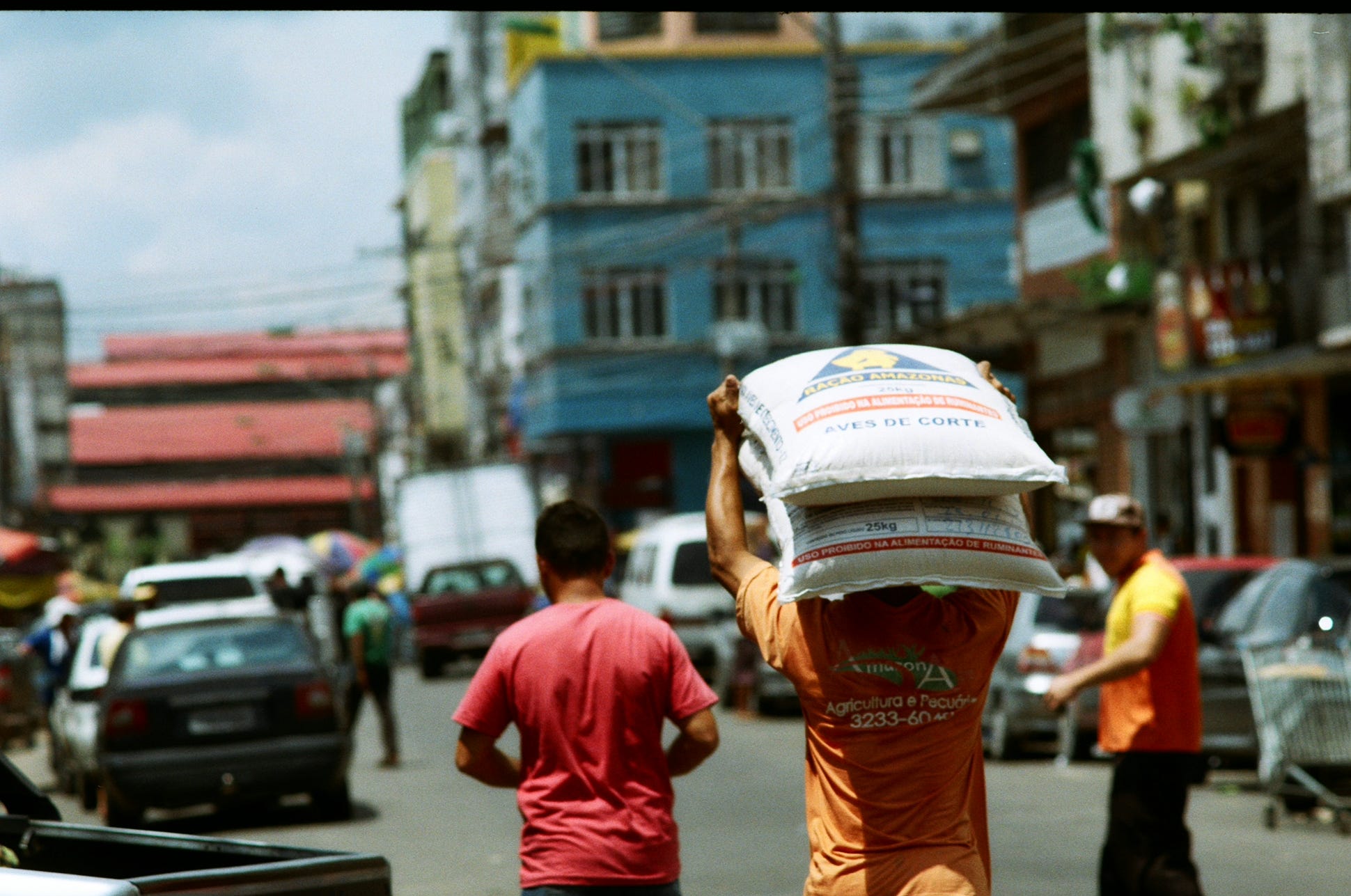
The images flickered and I kept flipping, almost mindlessly. Then a couple of bovines would invariably flash across the screen—camera taking in the whole animal at mid-range, no green fields in sight. The somehow familiar faded imagery of a farming show. A staple, available to view every night. And a casual reminder of the industry driving some of Brazil’s greatest sustainability challenges.
Beef is a big part of a supply chain that reaches markets in Europe and Asia. Along with soybeans, sugar and coffee, these are key exports that make up about a quarter of the country’s GDP. They are also Brazil’s biggest source of greenhouse gas emissions, of which cattle ranching is a top contributor.
But as Dayanne Sousa and Daniel Carvalho report for Bloomberg, that won’t stop the industry from trying to project a ‘green image’ at the upcoming COP30 climate summit. Neither is pressure from a (now delayed) new EU law set to mandate proof that imported goods aren’t produced on deforested land. According to the Bloomberg report, Brazil’s farm lobby intends to position itself as a leader in agriculture that helps cut greenhouse gases. In a piece for the Amazon-based Sumaūma, Claudia Antunes goes even further, suggesting that Brazilian agribusiness is trying to sabotage the country’s emissions reduction policy.
Still: agriculture is hardly ever at the centre of UN climate negotiations. What’s making most of the COP30 headlines so far is the flagship forest fund, TFFF (Tropical Forest Forever Facility), which is due to launch at the summit.
The fund aims to raise $125billion to pay countries that keep their tropical forests standing, based on an investment-style financing model that draws on both public and private capital for performance-based payments. Earlier this month, Natasha White wrote for Bloomberg that officials were still debating how to structure it. The World Bank now appears to have emerged the likely host of the facility, set to serve as its secretariat and trustee—Jesse Chase-Lubitz has the scoop for Devex.
The TFFF would be the first international climate and environment fund to require that some of its money goes directly to Indigenous peoples and traditional forest communities, Claudia Antunes reports for Sumaūma. It also avoids the controversial carbon market mechanism. But it still relies on investors and the financial world.
How to measure performance has emerged as an issue in past projects. In the forest carbon credits market, for example—where companies pay for projects that plant or protect trees as a way to reduce their carbon impact—many projects fail because of flawed protocols used to estimate their impact, according to Yale Climate Connections. (See the news highlights section below for more on carbon credit failures.)
“Banking on capitalism to save the planet”.
That’s the headline in Antunes’ Sumaūma report—and its not far from the trend I’ve seen emerging for a while, now more explicit in coverage of COP30 and beyond: that climate action is increasingly framed more in terms of business than policy, ethics or anything else (caveat follows):
“The climate economy is delivering”, says the World Economic Forum’s Alliance of CEO Climate Leaders in an open letter ahead of COP30—calling on businesses and policymakers to harness the gains from investing in the climate economy.
Climate investment is growth opportunity of 21st century, says Lord Stern, a leading British economist, banker, and academic, according to The Guardian.
“Carbon literacy” is now essential in business, Namrata Sandhu writes for Fast Company—and mastering it means being able to interpret environmental data much in the same way as financial data.
A debate over new UN carbon market rules could reshape global carbon markets and determine whether nature remains investable, Felicia Jackson writes for Forbes. Meanwhile, Brazil is pushing for a coalition of powerful nations in an attempt to unify carbon markets, John Ainger reports for Bloomberg.
…now for the caveat: “anything else”, except litigation.
More than 3,000 lawsuits related to climate change have been filed in 55 national jurisdictions and 24 international or regional courts, says the UN Environment Programme in a report, suggesting the cases are set to reshape global climate policy. The ICJ’s climate ruling, which we covered in last month’s post, is considered a turning point. It also strengthens the legal case for fossil fuel phaseout, University of Cambridge experts Harro van Asselt and Tejas Rao write in an analysis for IISD.
Here’s just one statistic of why that kind of pressure is needed, taken from Paredes Tamayo’s report for Mongabay: between 2022 and 2004, nearly 300 banks around the world channelled $138.5billion to companies developing new fossil-fuel projects. And that’s only in Latin America and the Caribbean.
So, what of COP30—what will Brazil achieve as host this year? We’re getting closer to finding out*. Meanwhile, the extreme events and risk estimates keep coming. According to one recent study reported by Al Jazeera, we can expect 57 “superhot” days each year by 2100—that’s nearly two months of dangerously high temperatures, and not even the worst-case scenario.
We know the bottom line. Averting catastrophic changes will take shifting—bit by bit—the entire financial-political system that governs how we live.
*For now, here’s what some journalists and analysts say on what to expect in Belém:
COP30: Six Ways the Brazil Climate Summit Can Succeed or Fail - John Ainger for Bloomberg
Can COP30 respond to the 1.5C challenge? - Carbon Brief
UN Climate Change Conference - IISD Earth Negotiations Bulletin
COP30: Nations Rethink Brazil Climate Summit Plans as Costs Soar - Eric Roston and colleagues for Bloomberg
Four Brazilians to watch at COP30 - France24

GLOBAL BRIEFING | around the world
On global shifts
🤝 ❌ International deals to protect the environment are looking much more fragile than they did a few months ago. The latest casualty of political pressure is a landmark agreement to cut global carbon emissions from shipping. Dozens of countries agreed to a Net Zero Framework in April under the auspices of the UN’s International Maritime Organization. The deal was ready to sign, with the prospect of shipping becoming the first industry to adopt internationally mandated targets to reduce emissions. But it’s now been abandoned after the United States and Saudi Arabia sabotaged the talks: respectively threatening countries with tariffs if they voted in favour of it, and tabling a motion to adjourn the talks for a year. See reports by Lyndal Rowlands and News Agencies for Al Jazeera, Akshat Rathi and Danielle Bochove for Bloomberg, and Esme Stallard for BBC News. Bloomberg’s Jennifer Dlouhy and colleagues have details of how the US worked on this behind the scenes.
Meanwhile, hopes are also fading on what was expected to be the first-ever global agreement to cut plastic pollution. Talks to finalise the treaty failed in mid-August after a three-year process, when two compromise draft texts were rejected by various groups within the 183 negotiating countries. And this month, Ecuador’s ambassador Luis Vayas Valdivieso resigned as chair of the treaty’s negotiating committee. See reports by Emma Bryce, Louise Krüger, Benard Ogembo and Conor McGlone for The Guardian, and Katharine Sanderson for Nature.
🌊 🐠 The trends look better on the marine protection front. Starting with the high seas—that’s areas that lie beyond national boundaries, which make up two-thirds of the Earth’s ocean surface: we covered news of the international agreement back in March 2023, after a negotiation process that lasted about two decades. As the UN Ocean Conference concluded in France last June, I wrote for Atmos magazine that the number of countries having ratified the treaty was just 10 short of the 60 needed to trigger its entry into force. Last month, after ratifications by Sierra Leone and Morocco, that threshold has now been cleared and the treaty is set to become international law from January 2026. For more on this read reports by Esme Stallard for BBC News, Lyndal Rowlands and agencies for Al Jazeera, and Teresa Tomassoni’s piece for Inside Climate News: an interview with Nichola Clark, senior officer at the Pew Charitable Trusts, one of the non-profits advocating for the treaty.
Another positive sign: during Climate Week in New York City last month, Chile and the UK joined other countries in committing to promote actions to protect the ocean under their national climate plans. According to Teresa Tomassoni’s report, that could include phasing out offshore oil and gas drilling in favour of investments in renewable marine energy, supporting sustainable fisheries and marine conservation of marine ecosystems, and decarbonising shipping (on shipping, that was last month—see above for how things turned out). Also in September, a World Trade Organization agreement designed to reduce overfishing took effect after adoption by 112 countries. The AP reports the agreement requires countries to limit subsidies—amounting to some $22billion worldwide—which encourage destructive practices, and creates a fund to support implementation in developing nations.
Campaigners for ocean protection are looking to build on that momentum, calling for protection of the deep seas, which are now under more immediate threat of exploitation to harvest critical minerals—read our coverage of those developments in May. And this month, efforts to stop the destruction of deep-sea biodiversity on the high seas got a boost from the International Union for Conservation of Nature (IUCN), a body that includes governments, NGOs, business and Indigenous groups. Most IUCN members adopted a resolution (and a wide-ranging new work programme) calling for a transition away from bottom trawling by the end of 2026.
WorldWise asked the Deep Sea Conservation Coalition what this means in practical terms—Bronwen Golder, the DSCC’s Seamounts Campaign Director, says it directly advances countries’ commitments under the High Seas Treaty and the 30×30 biodiversity protection target:
The newly adopted motion provides a clear, science-based mandate for governments to prioritise full and final protection of seamounts and other Vulnerable Marine Ecosystems (VMEs) when the [High Seas] Treaty enters into force on January 17. The motion also makles protection of seamounts from bottom trawling unequivocal [and] signals that the time for excuses and ignoring the science is over.”
News highlights
UN chief António Guterres has tasked a group of specialists with proposing new indicators of human development and prosperity—an attempt to find an alternative to economic output in the form of GDP, a traditional measure which fails on sustainability. Consensus is growing that an alternative is needed, and guidelines were issued by UNECE in September. But the ‘Beyond GDP’ policy proposal wasn’t on the agenda at September’s General Assembly, according to Nature.
On a related note: there’s ongoing disagreement about how to value nature as an economic asset, Elissa Miolene writes for Devex.
A global scientific initiative that assesses how close 25 Earth systems are to a point of irreversible change has found that at least one system—die-off of warm-water coral reefs—has likely passed that “tipping point”. Four others, including the dieback of the Amazon, are dangerously close. See Simmone Shah for TIME, Bobby Bascomb for Mongabay, Jeff Tollefson for Nature.
After a two-year probe, the world’s largest certifier of carbon offsets linked to major companies like Volkswagen, Gucci, Nestle and McKinsey & Co., has found no benefits from most credits attached to a massive forest-protection project in Zimbabwe, Ben Elgin reports for Bloomberg.
The WHO has said that since 2018, there’s been an “alarming” rise in common bacterial infections that no longer respond to standard treatment with antibiotics, Theo Farrant reports for Euronews.
UNESCO’s first biodiversity and climate assessment of more than 2,200 World Heritage Sites, Biosphere Reserves and Geoparks shows that almost all have already faced climate extremes over the past two decades, Keith Anthony Fabro reports for Mongabay.
Rempang Eco City, a large-scale development project in Indonesia’s western Riau Islands, is being developed as an “economic engine” for the country—but thousands of local residents fear that their traditional villages will be cleared in the process, Mohammad Yunus reports for Dialogue Earth.
A small but growing group of women have bought chinampas—ancient Aztec island farms increasingly threatened by urban development, mass tourism and water pollution—to cultivate sustainably in an effort to preserve them, Teresa de Miguel reports for the Los Angeles Times.
The city of Panipat in northern India powers circular fashion—but the workers who turn discarded clothes from Europe and the United States into yarn and blankets are vulnerable to toxic pollution and trade shocks, Mohammad Asif Khan reports for Atmos.
Researchers are documenting how climate change is driving anxiety, depression and suicidal thoughts in parts of rural Kenya, particularly among women who shoulder the responsibility of feeding their families, Craig Saueurs and colleagues report for Euronews.
Most Brazilians outside the Amazon still see the region through an idealized, distorted or fatalistic lens, according to results of a local survey, Ádria Azevedo writes for Liberal Amazon.
A group of Indigenous people has embarked on a 3000km journey on the Amazonian flotilla Yaku Mama—which means “mother water”—from the Andean mountains of Ecuador to Belém, expected to arrive as COP30 kicks off, Jorge Abreu reports for Folha de S. Paulo.
Ahead of the November meeting of the Parties to the Aarhus Convention, the UN Special Rapporteur on Environmental Defenders has released new Guidelines on Peaceful Environmental Protest and Civil Disobedience.
Audiovisual reports
🎥 Through its Belt and Road Initiative, China has invested more than $1 trillion in overseas infrastructure projects like roads and railways, dams and ports. Two years ago, we covered its influence and planned shift towards a ‘green’ agenda. Now, a reporting team from Inside Climate News is assessing those claims, investigating what Chinese-led development means for the environment and for people living near projects around the world.
🎥 In the Peruvian Andes, ancient Inca pilgrimages and modern Catholic prayer co-exist with engineering and lawsuits as communities struggle to confront the loss of glaciers, Gulnaz Khan reports in a PBS documentary.
🎥 In southern Tunisia, Al Jazeera reports that thousands of people are demanding the closure of a state-run phosphate plant they blame for cancers, respiratory illnesses, and a mass poisoning that hospitalised more than 120 people.
🕸 YOUR SUPPORT MATTERS
As always, a big thank you for supporting this project.
The newsletter is the product of years of experience across sectors, plus hours of reading, curation and writing. If you find it useful and have the means, please consider becoming a paid subscriber for just £1.5 a week to help keep it sustainable and free for all.
PLUS | COP briefings + resources
Browning Communications has organised a media briefing with experts from the UN, academia, non-profits, and the business sector to discuss expectations for COP30—register here for 22 October.
The Society of Environmental Journalists and the Solutions Journalism Network are offering a practical online workshop on integrating solutions journalism into climate coverage—register here for 22 October.
The World Resources Institute is launching The State of Climate Action in 2025, a report that lays out a roadmap for closing the gap in climate action across sectors to limit global warming to 1.5°C—register here for 28 October. It’s also hosting a COP30 resource hub updated with the latest from the Institute including commentary, analysis, and events.
Covering Climate Now is inviting journalists to register for a three-part crash course on UN climate negotiations and the upcoming COP30, taking place from 3-5 November—details and registration here.
VoxDev has a guide on how economic evidence can inform policymaking at COP30—read it here.
PS.
Thank you.
WorldWise is read across 77 countries—it remains independent thanks to the support of subscribers like you, and to the rest of my nomadic work-life. Sign up | Browse archive | Sponsor an issue
Created and edited by Anita Makri—journalist/writer, producer and editorial adviser covering global development and science in society. I also help selected organisations with compatible values to strengthen their media work. LinkedIn | Instagram | Email